If you’ve ever been to a funeral and thought:
‘That felt really personal.’
or
‘Blimey… that sounded exactly like them.’
There’s a good chance a funeral celebrant was involved.
But despite the fact that more and more funerals in the UK are now led by celebrants, lots of people still aren’t entirely sure what a funeral celebrant actually does.
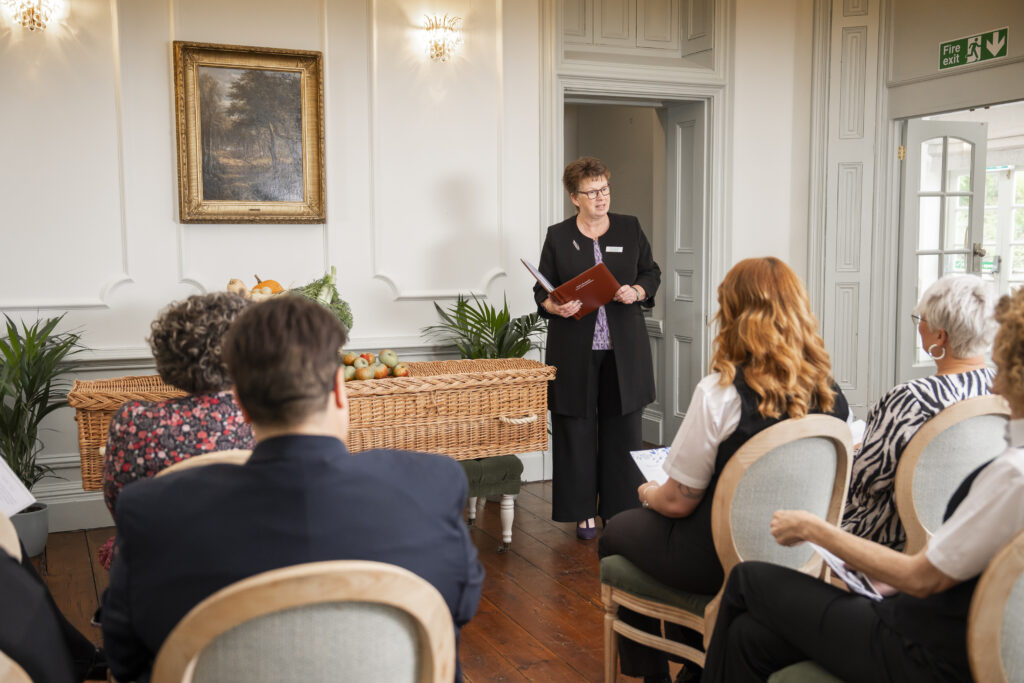
Do they just stand at the front and read things out?
Are they religious?
Do they work for the funeral director?
How do people become funeral celebrants in the first place?
And what even is funeral celebrant training?
All excellent questions.
So let’s have a little wander through the world of funeral celebrancy.
A Funeral Celebrant Is Basically a Storyteller, Guide, Organiser, Writer and Calm Human in One Outfit
A good funeral celebrant helps create and lead a funeral ceremony that genuinely reflects the dead person.
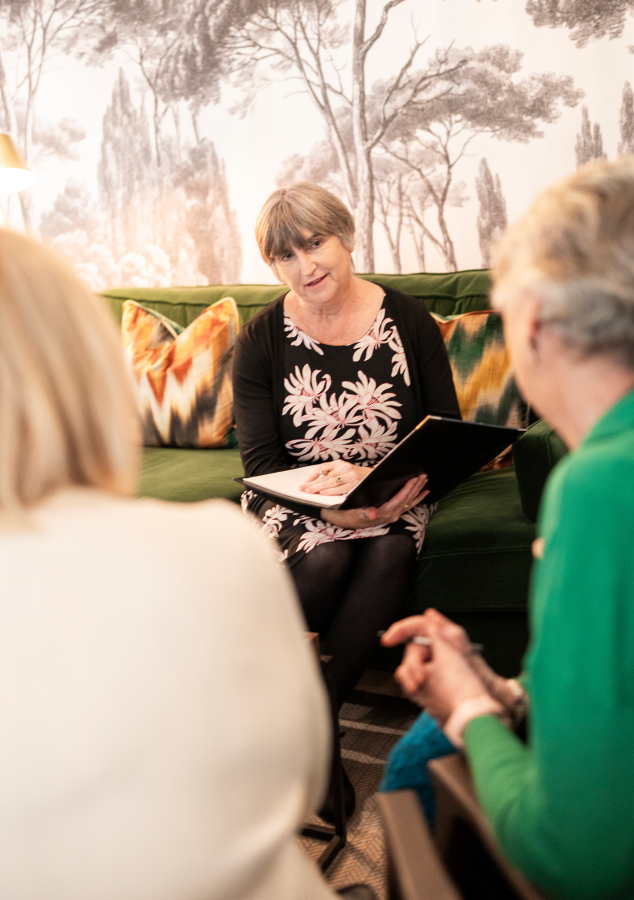
That means funeral celebrants spend a lot of time talking to families before the funeral itself. Often sitting around kitchen tables with cups of tea and half-open biscuit tins, gently guiding the meeting from the ‘let’s get the framework of the funeral sorted’ phase to the ‘right… now tell me absolutely everything about your person’ bit.
From those conversations, the celebrant starts building the ceremony:
- the structure
- the tone
- the stories
- the music
- the moments of reflection
- the funny bits
- the difficult bits
- the important bits
They’ll gauge the tone you’re after, try to get a very clear and deep handle on the person who has died, and work their noonies off to reflect that person – warts and all – in a way that feels open, honest and respectful, with a sprinkling of warmth and a dash of humour for good measure.
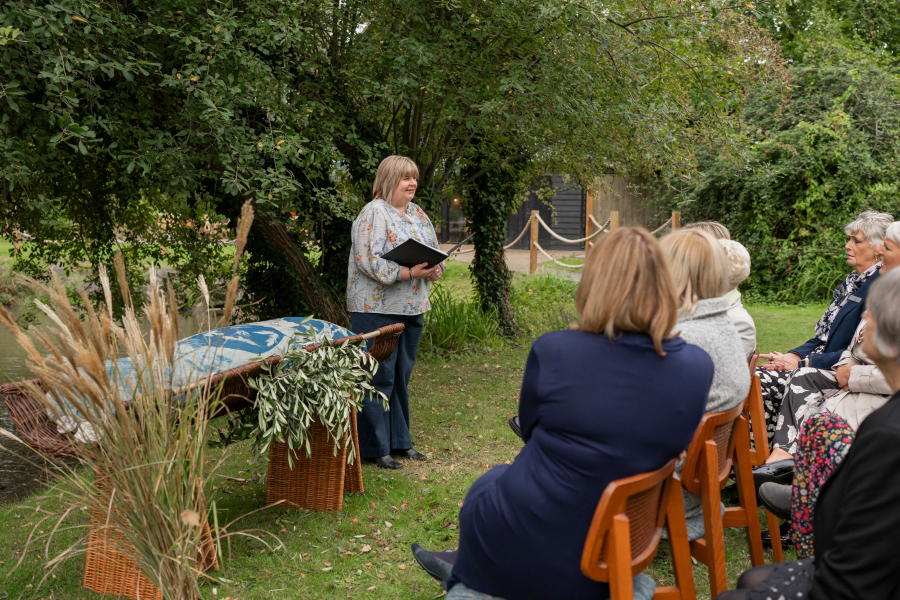
Because funerals can be much more than a chronological dash through a person’s lifetime of edited highlights. They can be an event – a good funeral celebrant can talk you through your choices from a single-slot up the local crematorium to a big old shindig in an alternative setting to a quiet back-garden farewell. They are the ceremonial side of things and you can, and should, find a celebrant that has done proper celebrant training to support you.
So… Are Funeral Celebrants Religious?
Sometimes.
Sometimes not.
Independent funeral celebrants can lead:
- completely non-religious funerals
- lightly spiritual funerals
- funerals with hymns and prayers
- highly personalised ceremonies
- alternative funerals
- traditional funerals with modern touches
It depends entirely on the person who has died and the people organising the funeral.
That flexibility is one reason celebrant-led funerals have grown so much in recent years.
People increasingly want funerals that sound like their person rather than something copied from a template.
And this is where independent celebrants sit in a slightly different space. If you do independent celebrant training you’re clearly not a vicar or other faith leader, but you’re also not required to exclude religious or spiritual content either. You fit somewhere in between the binary and, as such, can give a nod to whatever your clients actually need – whether that’s hymns, a prayer, a moment of silence, a poem about fishing, or a full-blown heavy metal exit soundtrack.
What Skills Does a Funeral Celebrant Actually Need?
People often assume funeral celebrants mainly need confidence speaking in public.
And yes, that helps. But a good funeral celebrant course will focus on so much more than simply standing up and speaking nicely.
Honestly, a huge amount of the job happens long before anyone stands at the front of a crematorium.
Good funeral celebrants need to:
- listen properly
- ask thoughtful questions
- write well
- structure stories
- manage emotions calmly
- handle awkward family dynamics
- read a room
- speak naturally
- understand funeral processes
- think on their feet when technology fails and somebody presses the wrong button on the music
Which is more often than you’d think.
A lot of people exploring how to become a funeral celebrant come from careers like:
- teaching
- nursing
- social work
- counselling
- writing
- community work
Because many of the skills transfer surprisingly well.
Though contrary to popular belief, simply ‘being nice’ is not the same thing as being a good celebrant. Good funeral celebrant training gives people far more tools than they ever imagine at the beginning – from ceremony structure and editing, to handling grief, building confidence and learning how to create funerals that feel genuinely human rather than generic.
What Is Funeral Celebrant Training?
This is the bit people are often most curious about.
Funeral celebrant training teaches people how to:
- write funeral ceremonies
- structure meaningful services
- conduct family meetings
- manage emotions professionally
- deliver ceremonies confidently
- understand the practical realities of funerals
- develop their own celebrant approach and voice
Some funeral celebrant courses are very short.
Some are more in-depth.
Some focus heavily on performance.
Others spend more time on writing and ceremony craft.
And like most things in life, not all funeral celebrant training courses are created equal.
People looking into becoming a celebrant in the UK are often surprised to discover there’s no single legal route into celebrancy. There are lots of different celebrant courses in the UK, lots of different approaches to training as a celebrant, and a huge variation in how much practical support people actually receive once the course is over.
Which means choosing the right funeral celebrant training can really matter.
Why Funeral Celebrants Matter
At Coffin Club, we spend a lot of time talking about funeral choice, death literacy and making funerals feel more human.
And funeral celebrants are often part of that shift.
A good celebrant can help families feel:
- calmer
- heard
- less frightened
- more confident making choices
- more connected to the person who has died
Not because they have magic powers.
But because being guided well during grief genuinely matters.
Funerals don’t ‘fix’ grief.
But they can absolutely shape how people carry it.
And when a ceremony feels honest, thoughtful and recognisable, that can stay with people for years.
Thinking About Becoming a Funeral Celebrant?
Lots of people quietly arrive at Coffin Club events and say:
‘I think I’d quite like to do that…’
And honestly?
Sometimes they’d be brilliant at it.
Coffin Club now focuses purely on funeral education and helping people understand their funeral options, but we still get lots of questions about funeral celebrant training, funeral celebrant courses and how people actually become celebrants in the UK.
If you’re curious and want to find out more without any weird hard sell, our pals at Match & Dispatch (yes, it’s us wearing other hats) run regular free Monday Meet-Up webinars where people can ask questions about celebrant work, training and what the job is really like.
You can find out more about the Monday Meet-Ups at Match & Dispatch.