More and more people are moving away from traditional funeral settings and choosing somewhere that feels more personal for the goodbye.
A village hall
A pub.
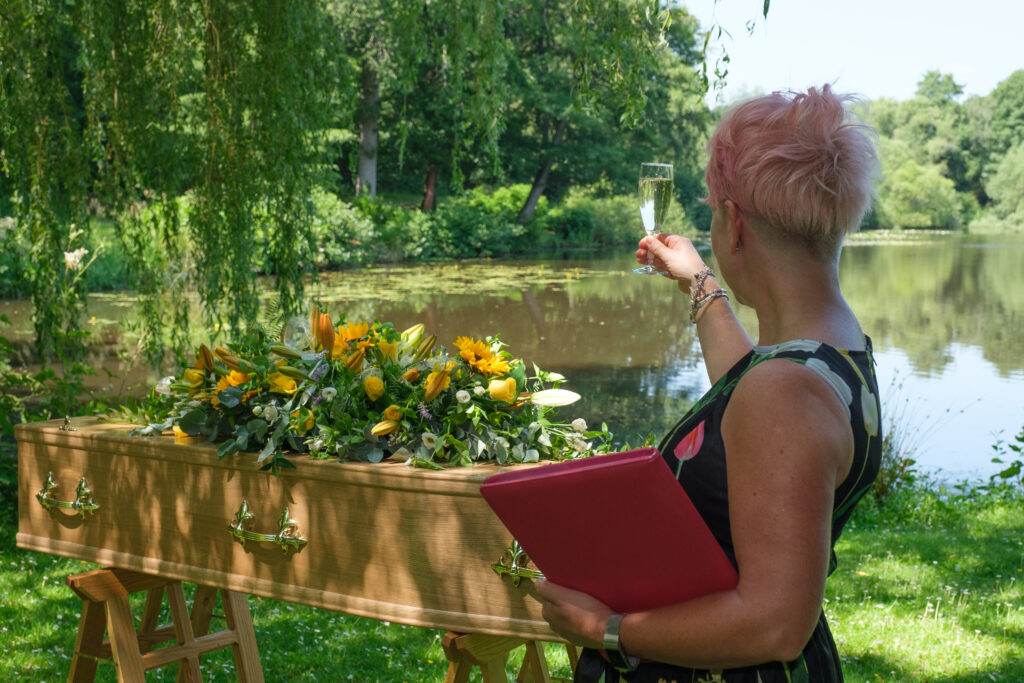
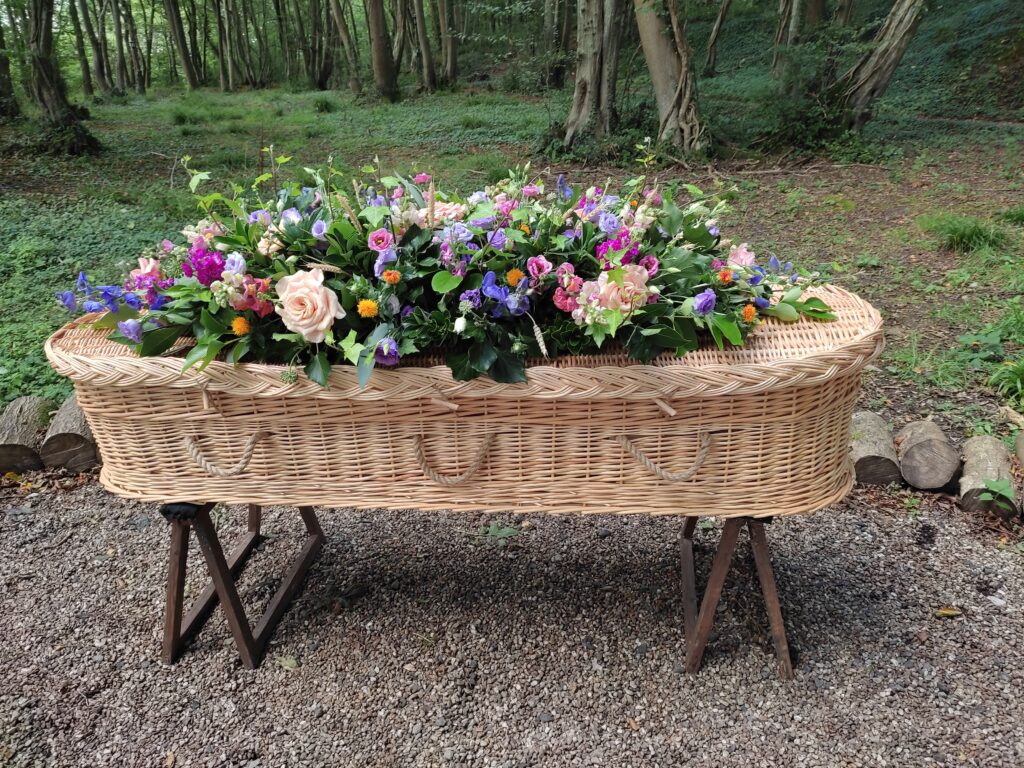
A woodland.
A family garden.
A barn.
A community space.
A beach hut café with sausage rolls and terrible parking.
Honestly – all sorts.
And once you step outside the ‘standard crematorium at 2:40pm’ model, people often suddenly realise:
‘Hang on… who actually organises all this?’
Because unlike a traditional crematorium funeral where lots of things are bundled together automatically, alternative funerals often involve several different people all working together behind the scenes.
So here’s a rough guide to who usually does what at a funeral in a more alternative setting.
The Funeral Director
The funeral director is usually the person coordinating the practical care of the body and the logistics around transport.
They may:
- bring the body into their care
- look after the body before the funeral
- help with dressing and viewing
- arrange transport
- provide the coffin
- liaise with crematoriums or cemeteries
- organise paperwork
- coordinate timings
- help manage logistics on the day
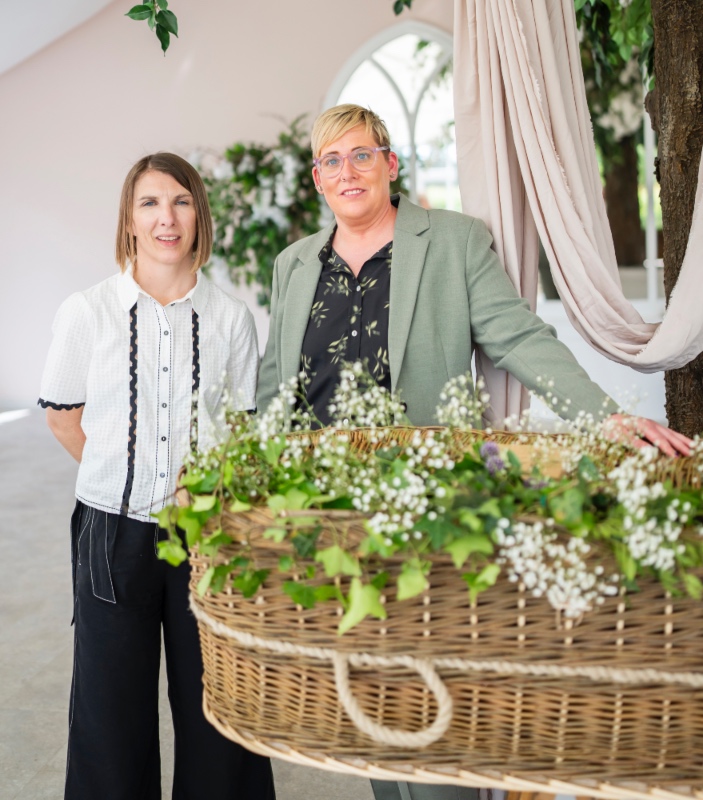
Beccy & Katy of Grave Expectations Funeral Directors
At an alternative venue funeral, they may also:
- arrange for the coffin to be brought into the venue
- organise bearers
- help set up a private viewing
- coordinate transport onwards to burial or cremation afterwards
A good funeral director becomes a sort of calm logistical octopus during this stage.
Quietly sorting things you didn’t even realise needed sorting.
The Funeral Celebrant
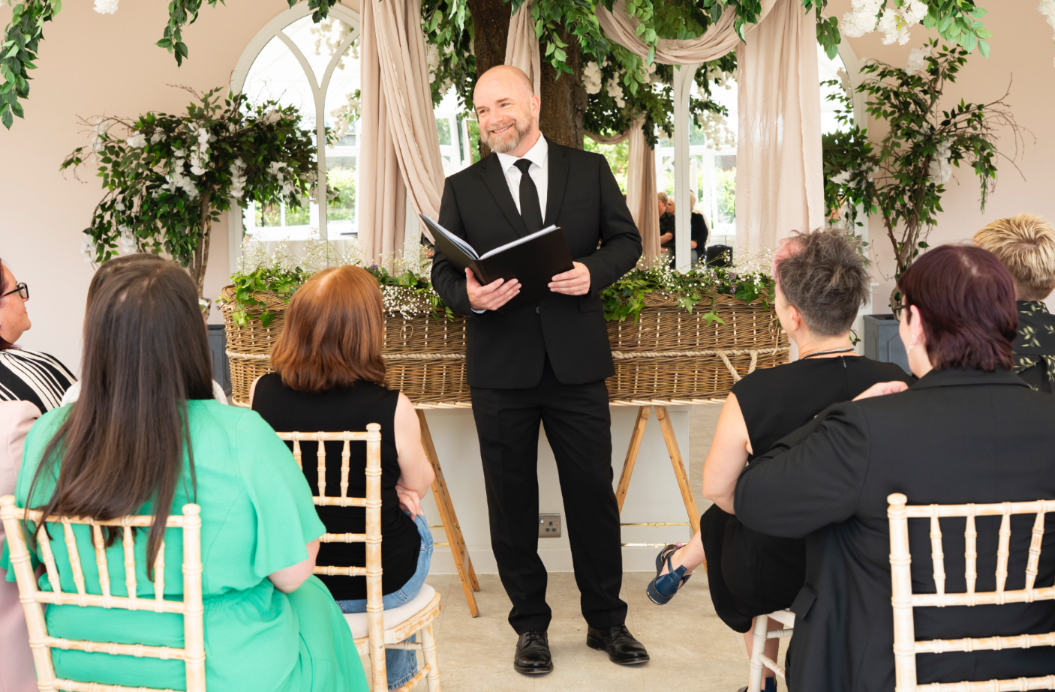
The funeral celebrant is usually responsible for creating and leading the ceremony itself.
That includes:
- meeting the family
- gathering stories and memories
- writing the ceremony
- helping shape the tone
- advising on readings and music
- coordinating contributions from family and friends
- leading the ceremony on the day
At alternative venue funerals, celebrants often end up wearing slightly more hats than usual.
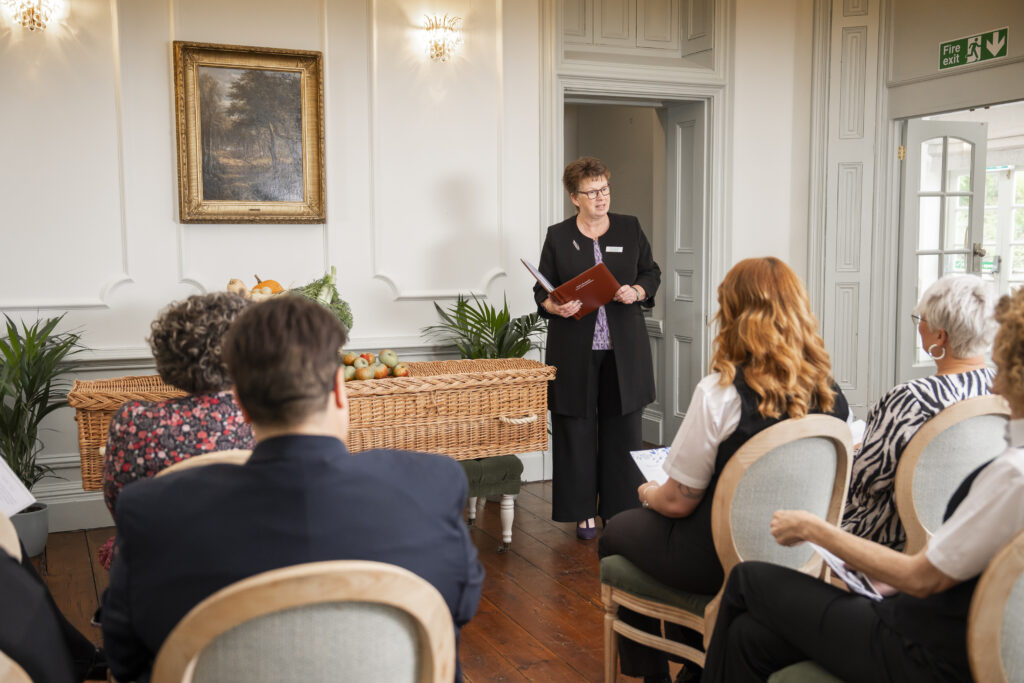
Deb Stodgell of Just Ceremonies Taunton
Because once you move away from the neat structure of a crematorium slot, somebody usually needs to help answer questions like:
- Where will people sit?
- How will the coffin come in?
- Where should speakers stand?
- Is there a microphone?
- What happens if it rains?
- How do we transition from ceremony to food?
- Are we doing speeches before or after cake?
This is one reason many people looking into funeral celebrant training or funeral celebrant courses are surprised by how much of the role is actually about guidance, structure and people management rather than simply public speaking.
Good celebrant training should cover all of this – not just how to stand up and conduct a ceremony, but how to manage the flow of a funeral, work alongside funeral directors and venues, support families emotionally, problem solve calmly and help create a day that feels joined-up and thoughtful from beginning to end.
And like most things, celebrant courses vary enormously. Some funeral celebrant courses focus heavily on performance and presentation, while others spend much more time on writing, family meetings, emotional intelligence, funeral logistics and the real-world practicalities of modern funerals.
Because a good celebrant is often doing far more behind the scenes than people realise.
They’re quietly holding the emotional shape of the entire day together.
The Venue
If you’re using an alternative venue, the venue staff themselves usually become part of the funeral team too.
Depending on the setting, they may help with:
- seating
- parking
- accessibility
- toilets
- heating
- lighting
- tables
- power supply
- kitchen access
- timings
- staffing
- clearing up afterwards
Some venues are very experienced with funerals now.
Others are more used to weddings, yoga retreats or craft fairs and are suddenly discovering they need somewhere discreet for six flower tributes and an ashes casket.
So communication becomes really important.
Particularly around practical things people may not immediately think about – like where the coffin enters, fridge space for catering, whether neighbours will complain about bagpipes, and who exactly is in charge of locking up at the end.
The Caterers
Food matters more at funerals than people sometimes realise.
Partly because grief is exhausting.
Partly because British people will process almost any emotional event through sandwiches.
At alternative funerals, catering can range from:
- tea and cake
- a pub buffet
- fish and chips
- a full sit-down meal
- homemade food brought by family
- woodfired pizza vans
- picnic hampers
- curry
- a massive table of picky bits and sausage rolls
The caterers may simply drop food off.
Or they may staff the entire gathering.
And often the food side of the day becomes the point where people properly relax, talk and reconnect after the ceremony itself.
Music and Technical Stuff
This is the bit that people underestimate approximately 100% of the time.
Traditional crematoriums already have:
- speakers
- microphones
- music systems
- technicians
- screens
- WiFi
- somebody whose entire job is pressing play at the right moment
Alternative venues?
Not always.
Which means somebody may need to organise:
- PA systems
- microphones
- playlists
- live musicians
- extension leads
- generators
- power supplies
- Spotify passwords
- somebody trustworthy to operate the music
Because sadly, ‘Uncle Dave says he’s good with Bluetooth’ has ended many a calm funeral atmosphere.
Florists, Printers and All the Other Bits
Then there are all the smaller moving parts that help shape the day:
- florists
- printers
- coffin suppliers
- photographers
- videographers
- venue stylists
- bar staff
- celebrants
- musicians
- memorial stationery
- transport providers
Alternative funerals can sometimes feel less formal than traditional funerals – but behind the scenes they’re often incredibly collaborative.
Why More People Are Choosing Alternative Funerals
For lots of people, it’s simply about wanting the funeral to feel more like the person who has died.
Less rushed.
Less formal.
Less conveyor belt.
More personal.
More flexible.
More human.
And as conversations around death become more open, more people are realising they actually do have choices.

Which is one reason interest in funeral celebrant training, funeral celebrant courses and wider funeral education has grown so much in recent years. People are increasingly curious about how funerals work, who does what, and how funerals can feel more personal and less intimidating.
Because once you understand the moving parts, funerals start to feel far less mysterious.
And honestly?
That’s a good thing.